


A major report from the UK’s Climate Change Committee warned that Britain was designed for weather conditions that no longer exist and now requires urgent adaptation to survive worsening global heating. The report stated that the country remains dangerously unprepared for extreme heat, flooding, droughts, and rising sea levels expected in coming decades.
The committee warned that temperatures above 40C could become common across the UK by 2050. It stated that heat-related deaths could rise to 10,000 annually without major changes to infrastructure, housing, healthcare, and emergency planning.
The report found that around 90% of houses in England are now vulnerable to overheating because most British buildings were designed to retain heat rather than cope with long periods of extreme temperatures. Schools, hospitals, transport and care homes were also found to be highly exposed to climate risks.
The Climate Change Committee recommended widespread installation of air conditioning in hospitals and care homes within 10 years and in schools within 25 years. It also called for legal maximum workplace temperatures to protect workers during severe heatwaves.
The report stressed that climate adaptation must now become a national priority equivalent to infrastructure and economic planning. Officials warned the costs of failing to act would be far greater than the costs of preparing Britain for hotter conditions.
Experts behind the report argued that Britain’s existing adaptation strategy remains fragmented and insufficient despite repeated warnings over recent years. The committee stated that climate impacts are already accelerating faster than government responses.
The report therefore presented one of the starkest official warnings yet about how climate change is reshaping the UK and threatening infrastructure originally designed for a cooler and more stable environment.
Heatwaves, Flooding, and Droughts Expected to Intensify Across Britain
The Climate Change Committee warned that Britain faces increasing risks from simultaneous climate threats including extreme heatwaves, severe flooding, water shortages, and rising wildfire danger. The report described climate impacts already affecting multiple regions of the country and projected far more severe conditions by mid-century.
The committee warned that river peak flows could rise by as much as 45%, increasing flood risks for millions of homes and businesses. Coastal communities and infrastructure are under threat as sea levels around the UK could rise by 45cm by 2050.
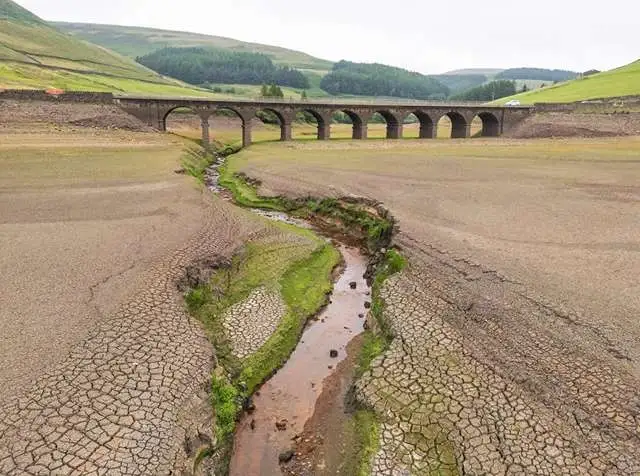
At the same time, Britain could face severe drought conditions during summer months. The report projected that summer river flows may decline by one-third while the country could experience a daily water shortfall of more than five billion liters by 2050.
The committee also warned that food production and agriculture are facing increasing threats from unpredictable weather patterns, extreme rainfall, drought and rising temperatures. Wildfire risk is also forecast to rise significantly, particularly during long hot and dry spells.
Scientists said Britain has already seen temperatures rise by about 1.4C above historical averages and could reach around 2C of warming within two decades. Experts warned that weather events once thought to be infrequent may become increasingly common.
The report said Britain’s infrastructure is still poorly adapted to these new realities. Roads, rail systems, homes, schools and hospitals were largely designed around cooler historical weather patterns that no longer reflect future climate conditions.
Researchers said climate threats are no longer theoretical future scenarios but immediate risks already reshaping daily life across the country. They said adaptation planning needs to accelerate rapidly before climate impacts worsen further.
The report therefore painted a picture of a country increasingly vulnerable to overlapping climate crises involving heat, flooding, drought, infrastructure stress and growing pressure on public services.
Climate Change Could Deepen Social and Economic Inequality
Experts warned that climate change is likely to worsen existing social inequalities across Britain unless adaptation policies are designed to protect vulnerable communities. The report said poorer households are often more vulnerable to heat, flooding, rising costs and food insecurity.
Properties on lower incomes are less likely to be able to afford cooling systems, flood defences, insurance costs or home improvements needed to adapt to worsening climate conditions. Older homes and rented properties were flagged as especially vulnerable to overheating and damage from extreme weather.
Risks to public health were also highlighted in the report. Pregnant women, the elderly, children and outdoor workers were identified as being especially vulnerable during extreme heat events. Scientists said prolonged exposure to high temperatures could lead to more illness, hospitalizations and deaths.
Schools are poorly prepared for rising temperatures because many classrooms already become dangerously hot during summer heatwaves, they said. The committee warned that educational inequality could worsen if students in poorer communities have increasingly difficult learning conditions.
Food insecurity was another major concern. Climate-related disruptions to agriculture and global supply chains could push up food prices and increase pressure on lower-income households already struggling with the cost of living, experts said.
They also warned of political fallout if governments don’t treat climate adaptation fairly. Some analysts said public frustration with higher costs, infrastructure failures and uneven protection could add to social tensions and political instability.
The report stressed that adaptation efforts must therefore focus not only on infrastructure upgrades but also on fairness, healthcare access, housing quality, and support for vulnerable populations most exposed to climate risks.
Researchers argued Britain must begin “thinking like a hot country” because climate conditions previously associated with southern Europe may increasingly become part of everyday life across the UK.
Government Faces Pressure to Increase Climate Adaptation Spending
The Climate Change Committee warned that Britain currently spends far too little on climate resilience compared with the scale of the threats ahead. The report estimated the UK may need up to £11 billion annually for adaptation measures involving flood defenses, water systems, cooling infrastructure, and building upgrades.
Current government spending on climate resilience remains estimated at only £1 billion to £2 billion per year. The committee warned that failing to invest now could eventually cost the country as much as £260bn a year by the late 2040s through economic damage, health impacts and infrastructure losses. The report called for large-scale investments in flood prevention systems, reservoir construction, water infrastructure and retrofitting homes to cope with extreme heat and severe weather. It also called for stronger national planning standards tied directly to climate risks.
Government officials acknowledged the seriousness of the report but did not immediately commit major new funding. Ministers pointed to existing investments involving flood defenses, sustainable farming, and environmental programs while saying further action would be reviewed.
Critics argued the government continues moving too slowly despite repeated scientific warnings over recent years. Environmental experts warned Britain risks falling behind other countries already adapting infrastructure to hotter and more unstable climates. The report also added to the pressure on policymakers to implement more robust climate mitigation policies to cut emissions and limit future warming. Scientists said adaptation alone would not be enough to fully protect Britain if global temperatures continue to rise rapidly.
Climate experts emphasize that many future risks are still avoidable, depending on political choices and emissions policies in the coming decades. However, they warned that time for preparation is narrowing as extreme weather events accelerate worldwide.
The committee therefore concluded that Britain faces an urgent choice between investing heavily in climate resilience now or facing far larger economic, social and human costs in the future as global heating intensifies.